
For my hike on the Pacific Crest Trail this year, I treated myself to a new tent once again. Not because I needed one: my Durston X-Mid 1 Solid, bought in 2023, is still doing its job faithfully. It was simply the urge to try something new and save a few grams. Whether that was worth it for me – and whether it would be worth it for you – is what we’ll try to find out today.
Materials and construction of the Big Agnes String Ridge VST
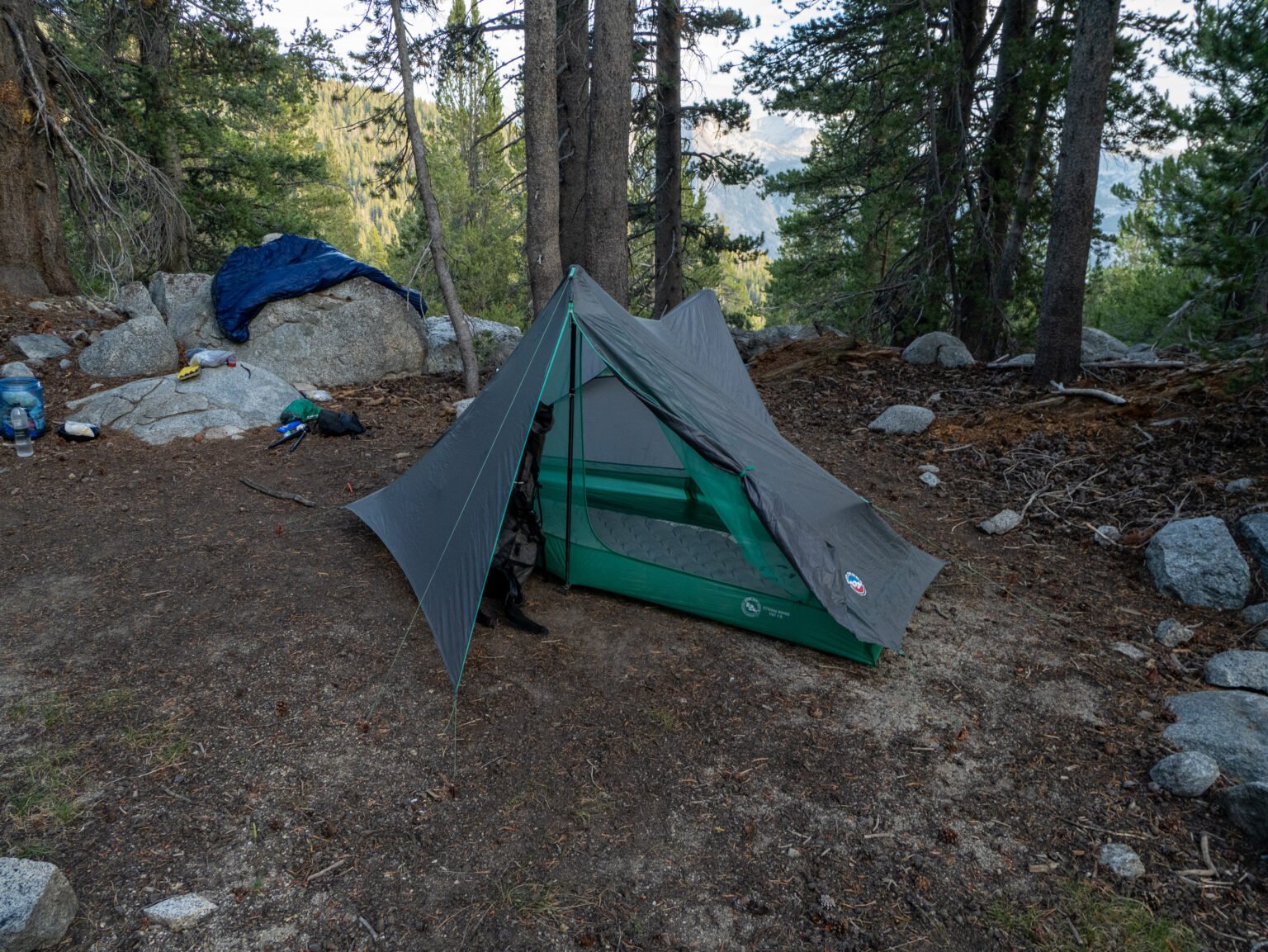
The Big Agnes String Ridge VST is a bold tent from a big mainstream tent maker. It’s a single-wall tent that, unlike almost every other Big Agnes tent, does without poles: you pitch it with your trekking poles. That saves weight, but it may also come with one or two drawbacks. More on that later.
The big innovation in this tent – and in pretty much all the Big Agnes tents relaunched for 2026 – is the new HyperBead fabric. On this model it’s used in 20D for the fly and 15D for the floor. Of course this is heavily simplified, and depending on the fabric the differences can be bigger or smaller. But as a rule of thumb, a 20D fabric is usually heavier and tougher than a 15D one. The marketing promises that it’s 6% lighter, 50–100% stronger and 25% more waterproof than conventional tent fabrics. I can neither prove nor disprove any of that. All I can say is that, unlike silnylon tents, the fabric doesn’t seem to absorb water and doesn’t need re-tensioning. That’s great, but both are properties that many modern silpoly or Dyneema tents share too, such as those from Tarptent, Durston and Zpacks.
Specifications
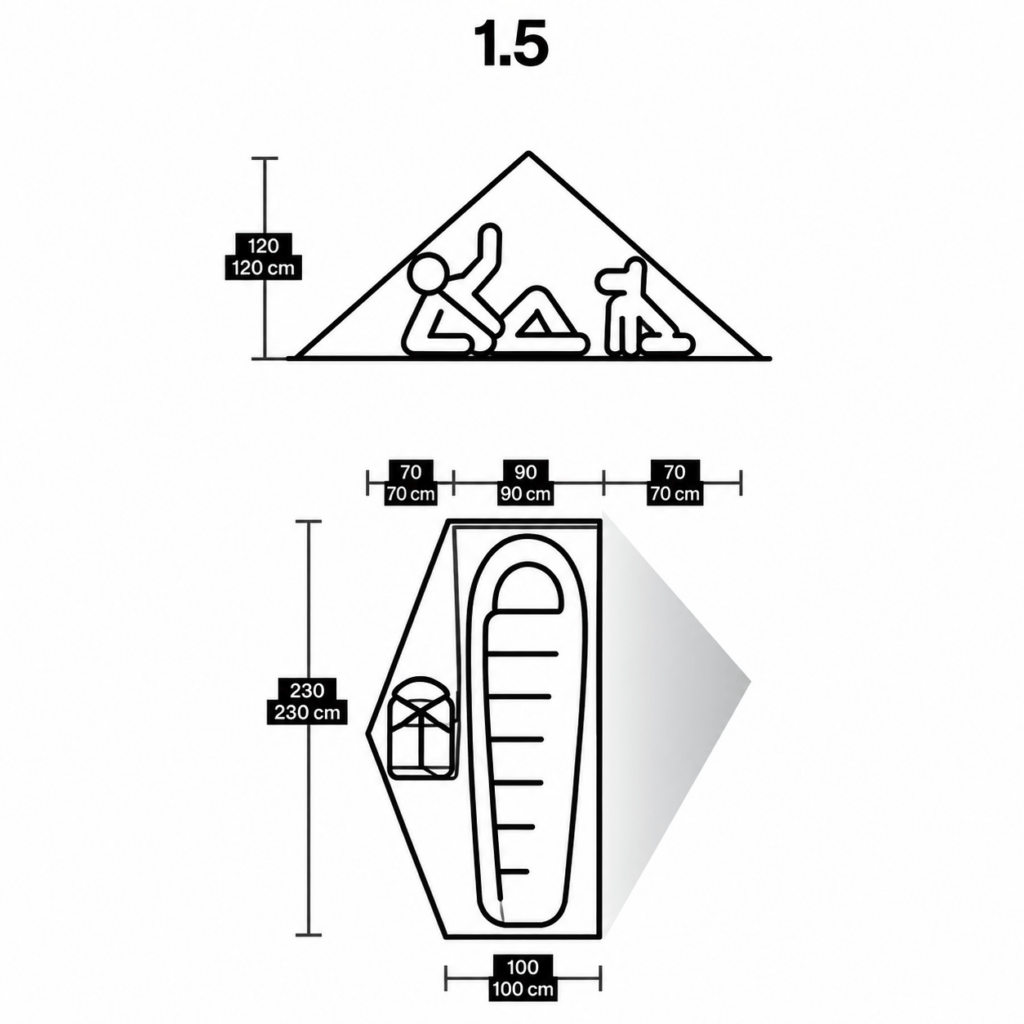
- Trail weight: 547 g
- Total weight: 654 g
- Packed size: 36 × 10 cm
- Floor area: 2.1 m²
- Vestibule area: 0.9 m²
- Interior height: 119 cm
- Footprint weight: 74 g
Pitching the Big Agnes String Ridge VST 1.5
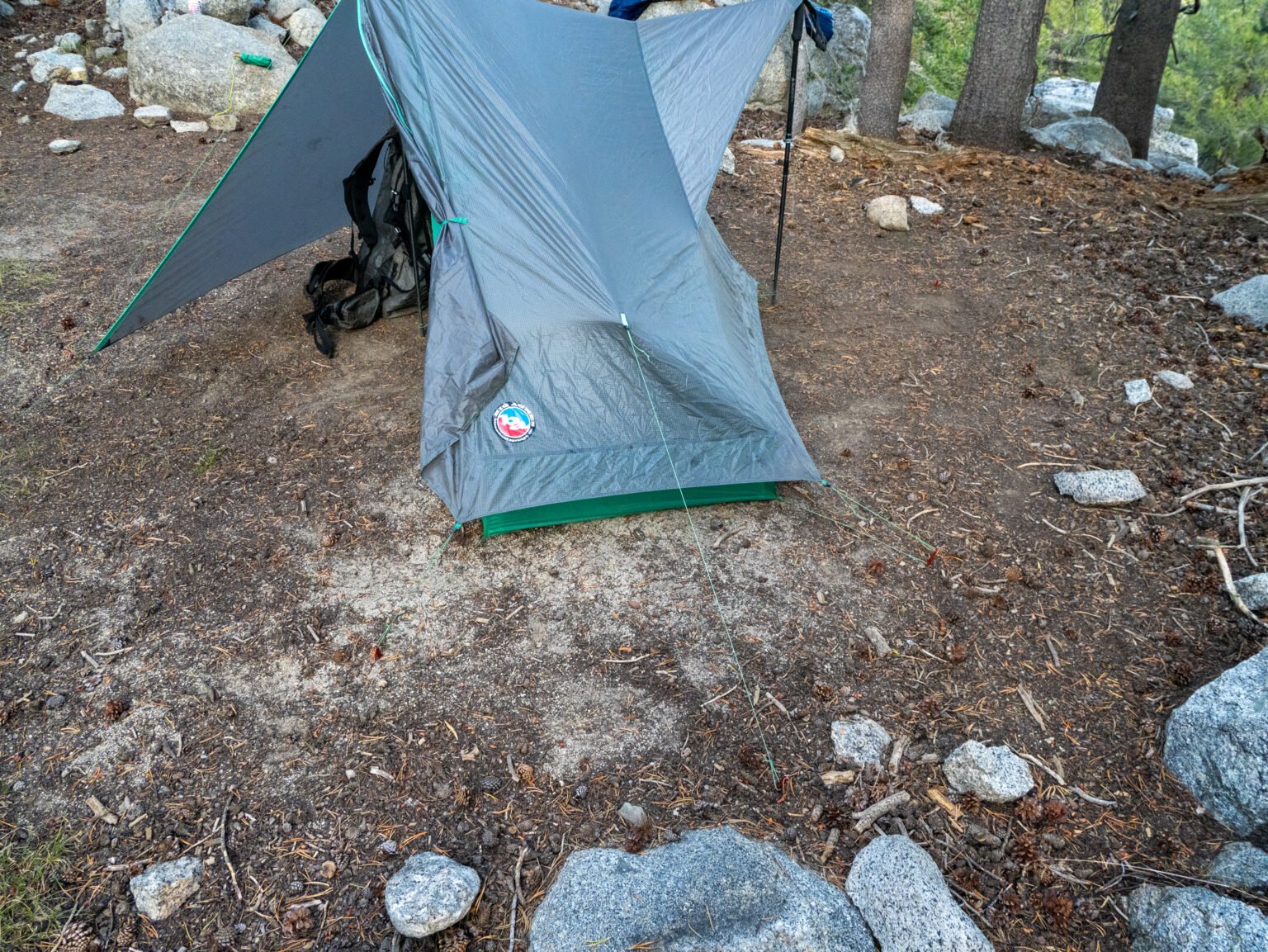
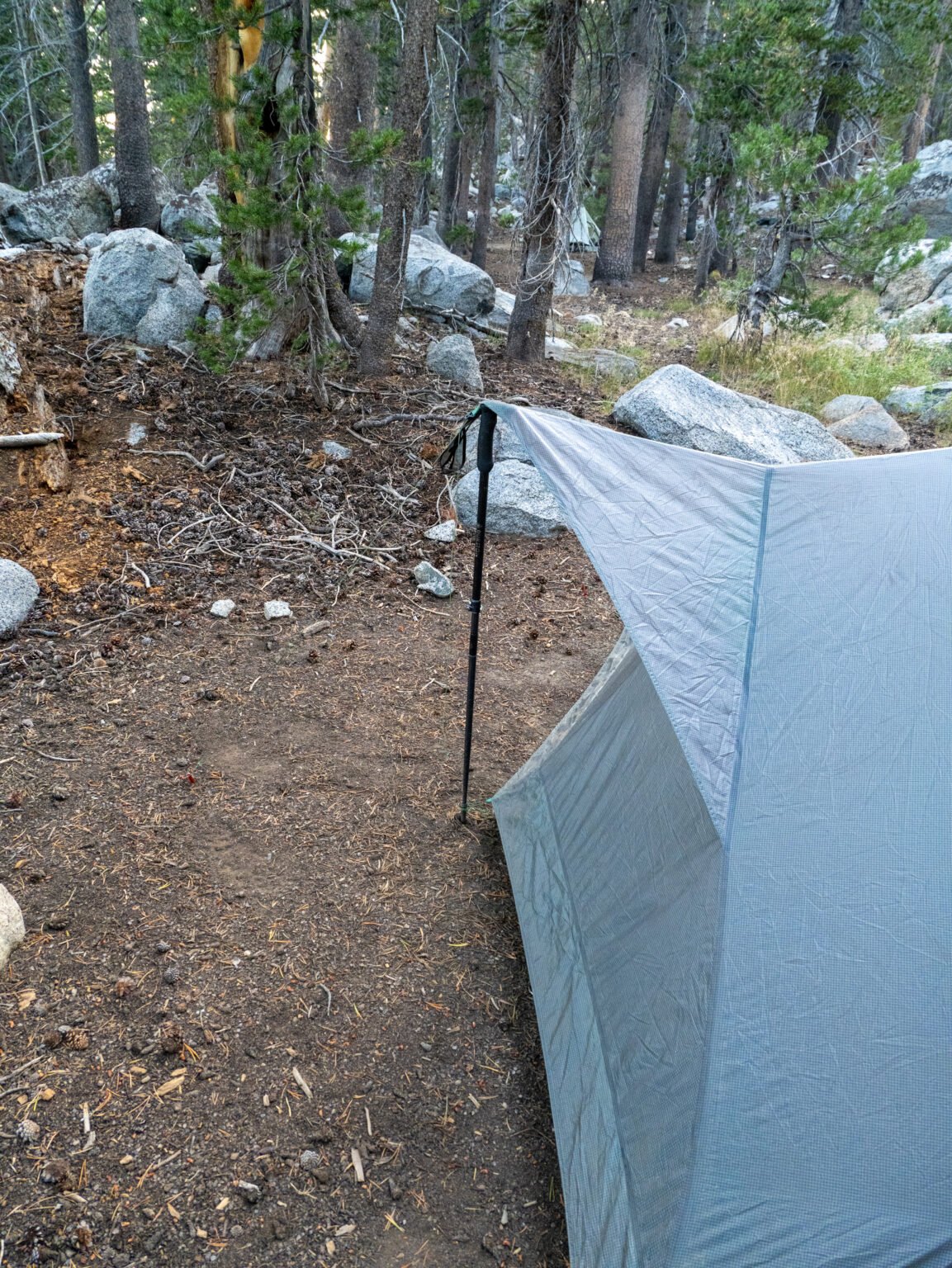
With a little practice, the tent goes up very quickly. Simply lay the tent on the ground and put a stake in each of the four corners. On the door side you need a trekking pole set to 120 cm and two more stakes – one for the guyline on the pole and one for the door. At the opposite end goes a trekking pole set to 100 cm, which is also guyed out. So you need at least seven stakes to pitch the tent. There are two more in the bag, though, because there’s an optional guy-out point at both the head and foot end that lets you create more room at your head and feet.
Test conditions: 26 nights on the Pacific Crest Trail
I spent 26 nights in the tent while crossing the Sierra Nevada in the USA on the PCT. I had rain, hail, thunderstorms, stormy and cold nights, but mostly very nice weather with low humidity. Part of the reason for that is that I paid attention to it when choosing my campsites.
What I liked about the Big Agnes String Ridge VST 1.5
- Lots of space
- The ventilation
- Small footprint
- Quick pitch
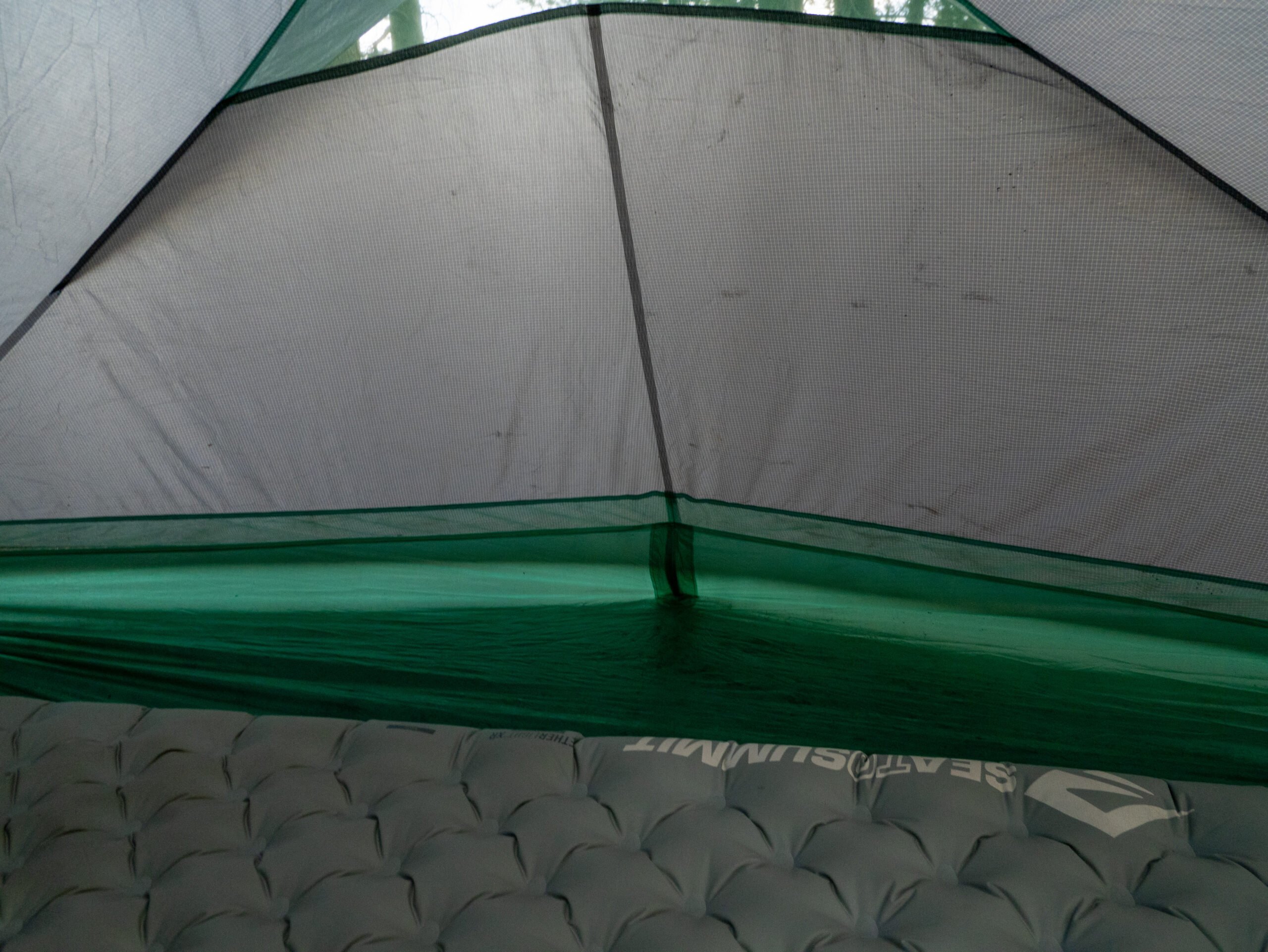
Compared with my Durston, the Big Agnes feels like a palace inside. There’s room at the head and foot end, and along the sides you can comfortably stash a piece of gear or two – or maybe even set up a small dog bed. If you really push it, you could probably bring all your luggage into the tent.
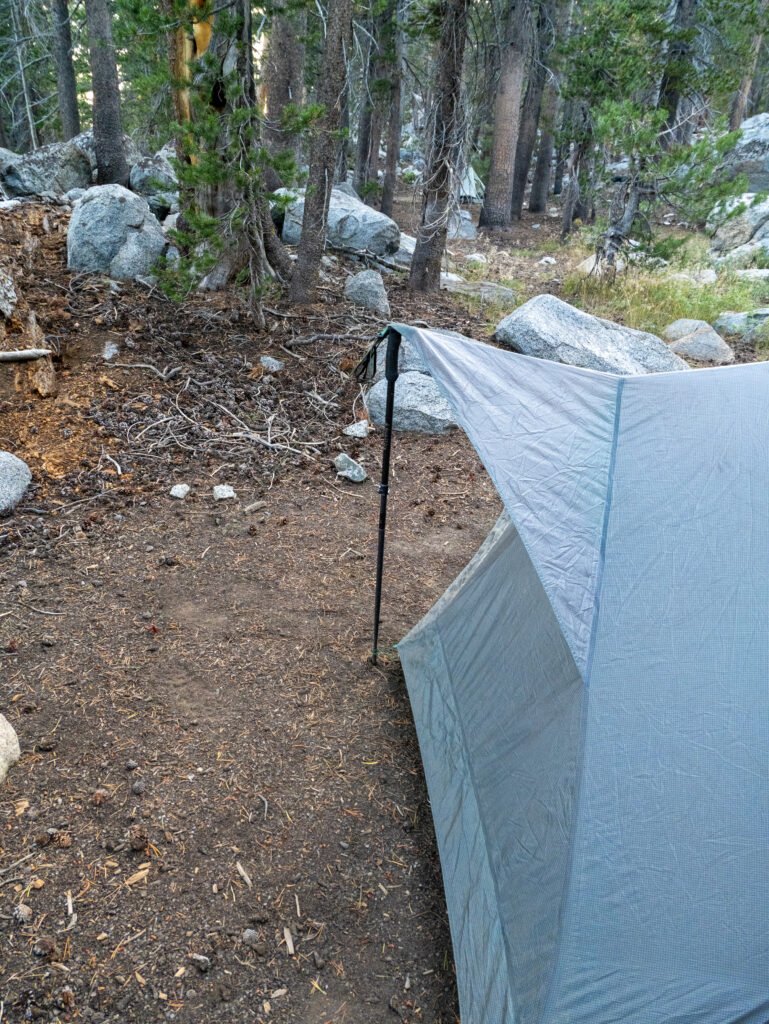
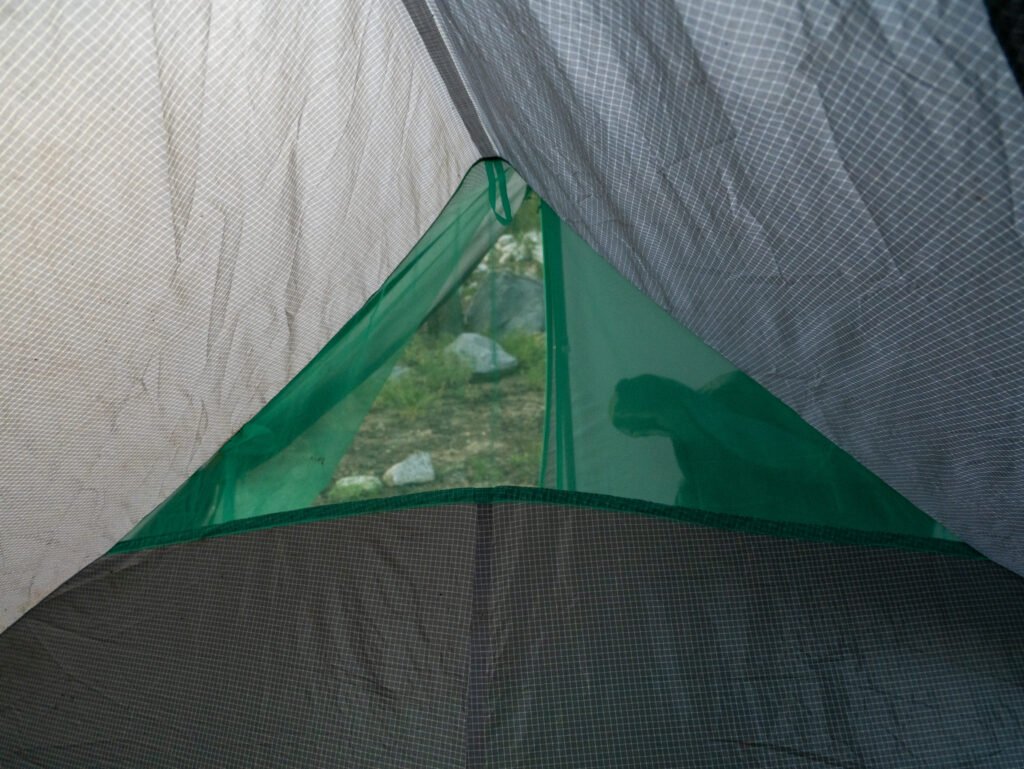
The tent looks a bit strange, and that’s down to the ventilation. After one hike I obviously can’t offer scientific proof of how effective the ventilation is, and humidity in the Sierra Nevada tends to be low. On most days I had practically no condensation. Only when it had rained, or when I already knew while pitching that the site was problematic – next to a meadow or right by a lake, for example – was the tent wet or frozen on the inside the next morning. I think the ventilation is very effective.
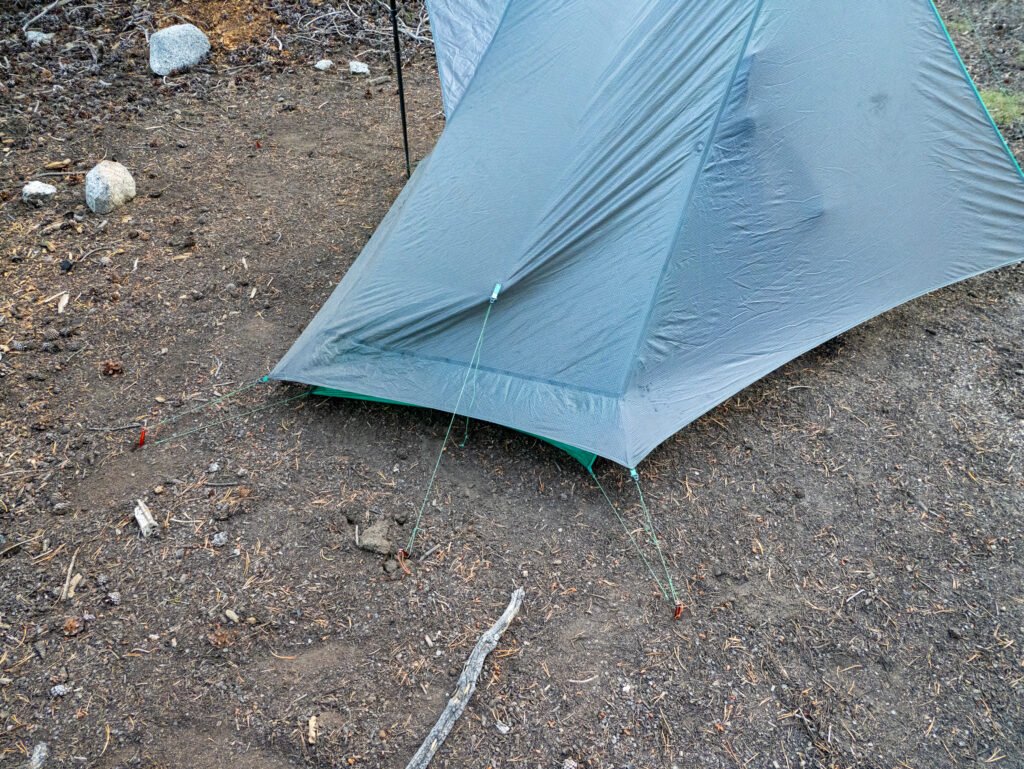
The footprint the tent needs seems smaller to me than the Durston X-Mid 1’s, which I really like. However, the stake positions at the corners can’t be adjusted. You have to take that into account when pitching. Pitching itself is easy and quick, even in bad weather – provided the ground is reasonably flat.
What I didn’t like about the Big Agnes String Ridge VST 1.5
- My feet and head kept touching the tent fabric
- On uneven ground it was hard to get a proper pitch
With my sleeping pad and my thick synthetic quilt, my head and feet unfortunately kept touching the fabric. The extra guy-out points don’t help with that either. Most of the time it’s not a problem, but if condensation does form despite the good ventilation, you get wet quickly. The only real way to avoid it is a sleeping bag and pad combination that’s lower overall.
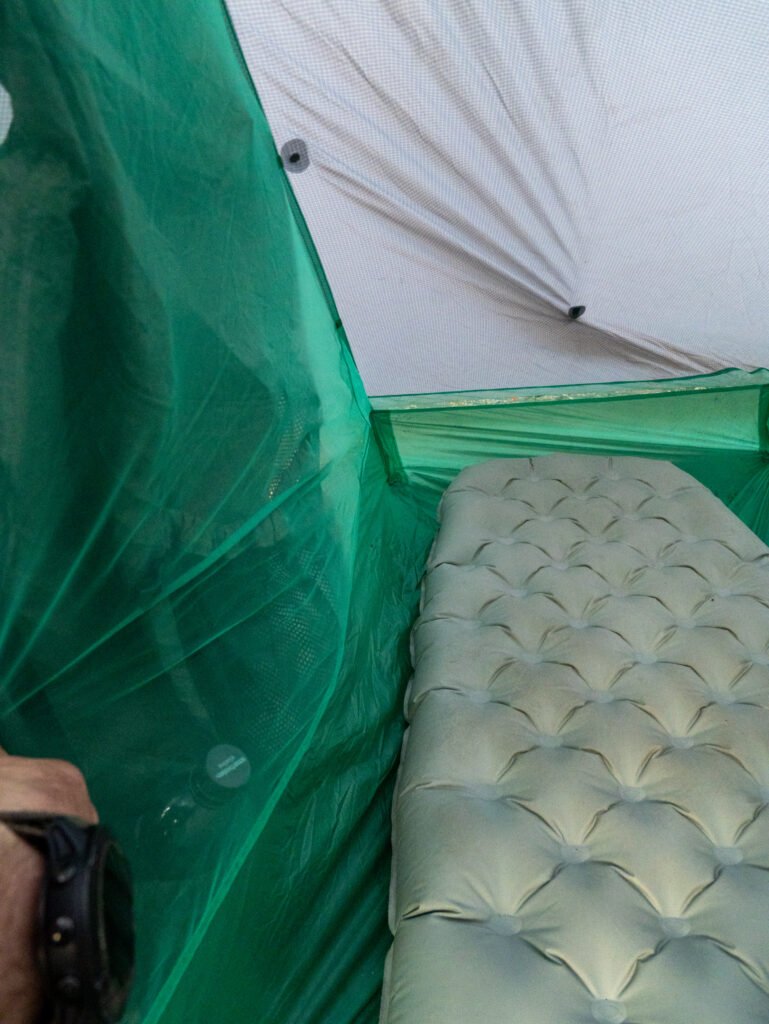
When the conditions for pitching weren’t ideal, it was hard to get the tent into a proper shape. That doesn’t just look odd – it can also mean condensation runs into the tent in awkward places.
Stakes and floor: what you should consider
- Stakes
- Very delicate floor
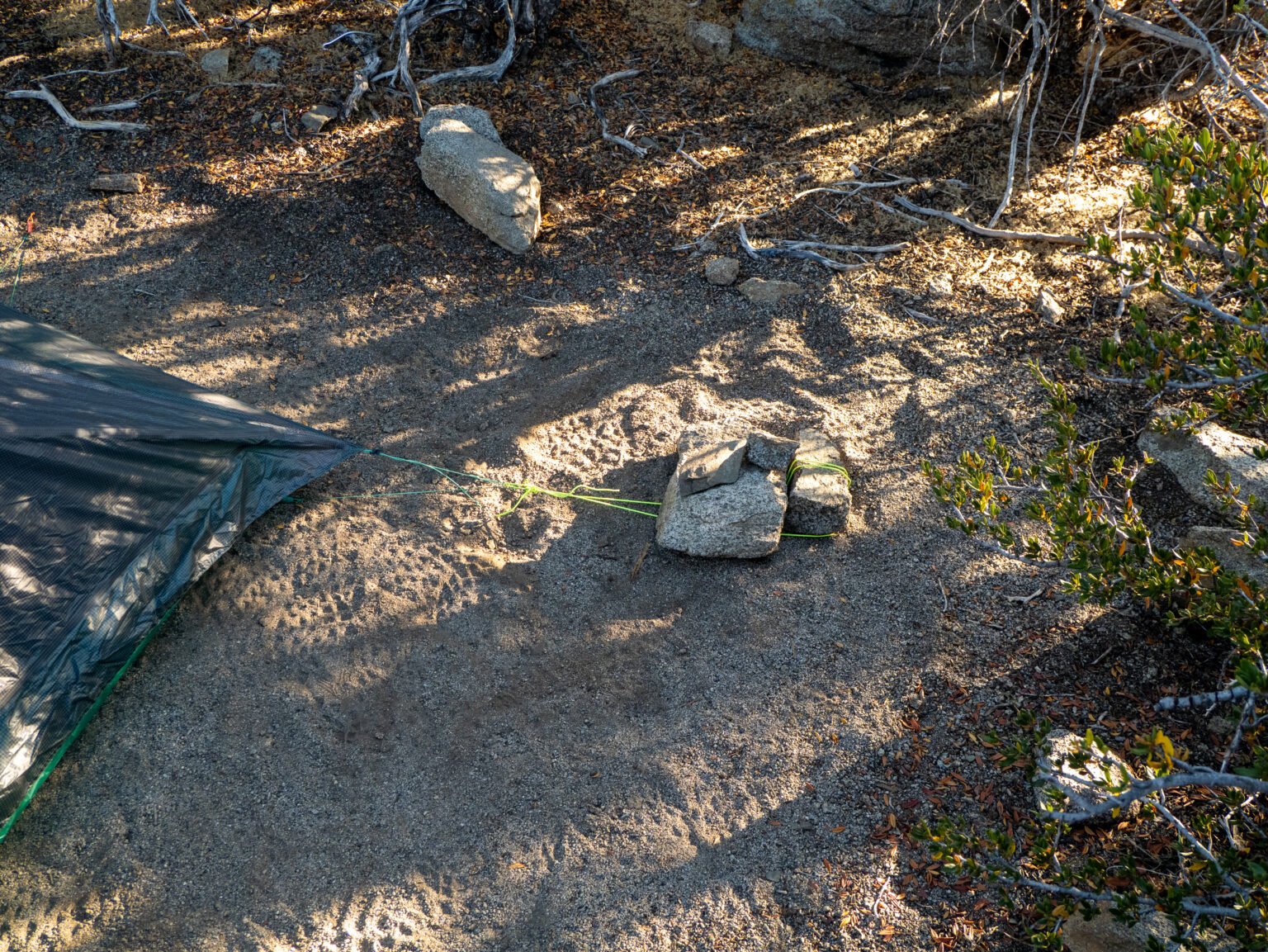

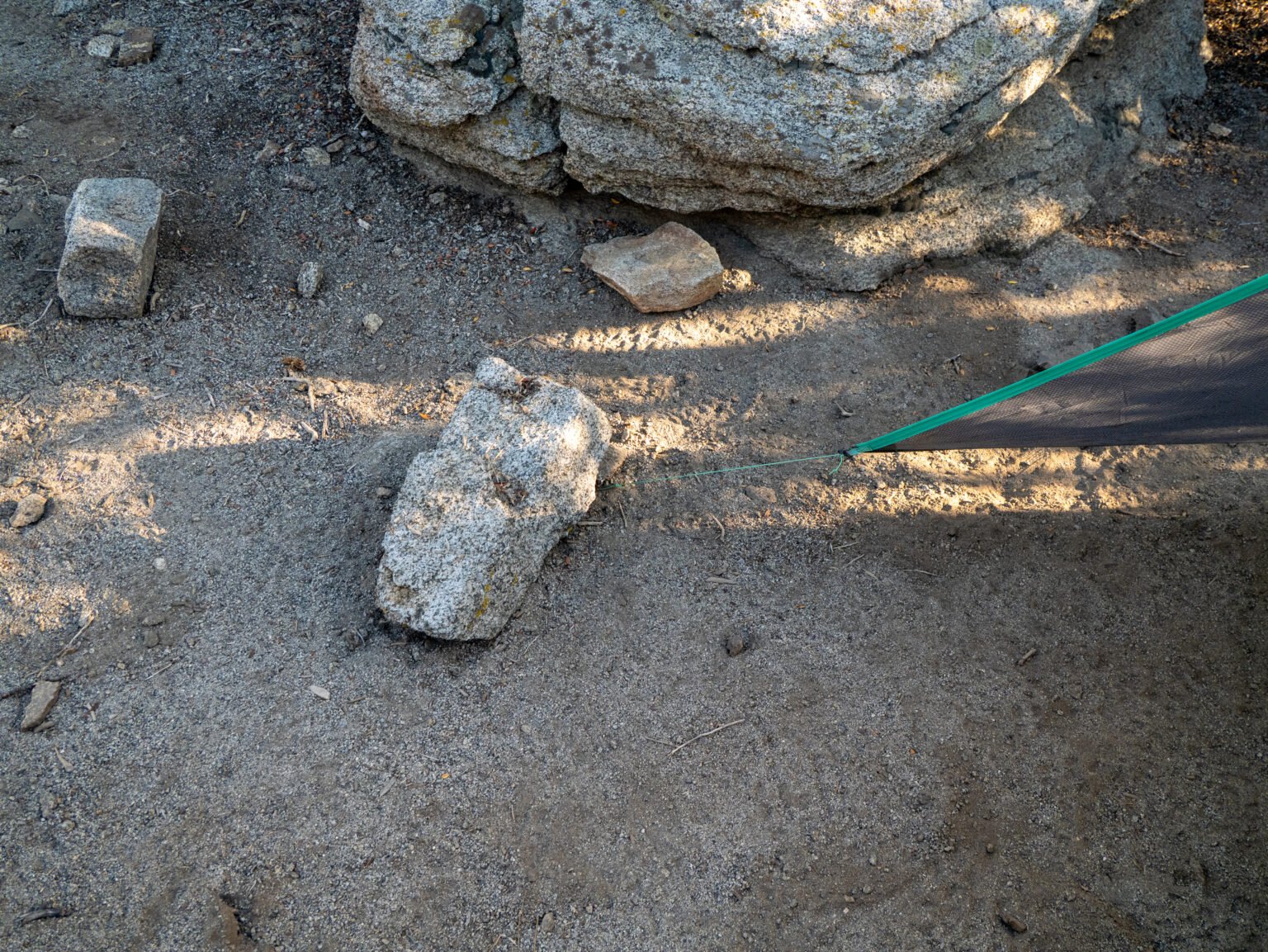
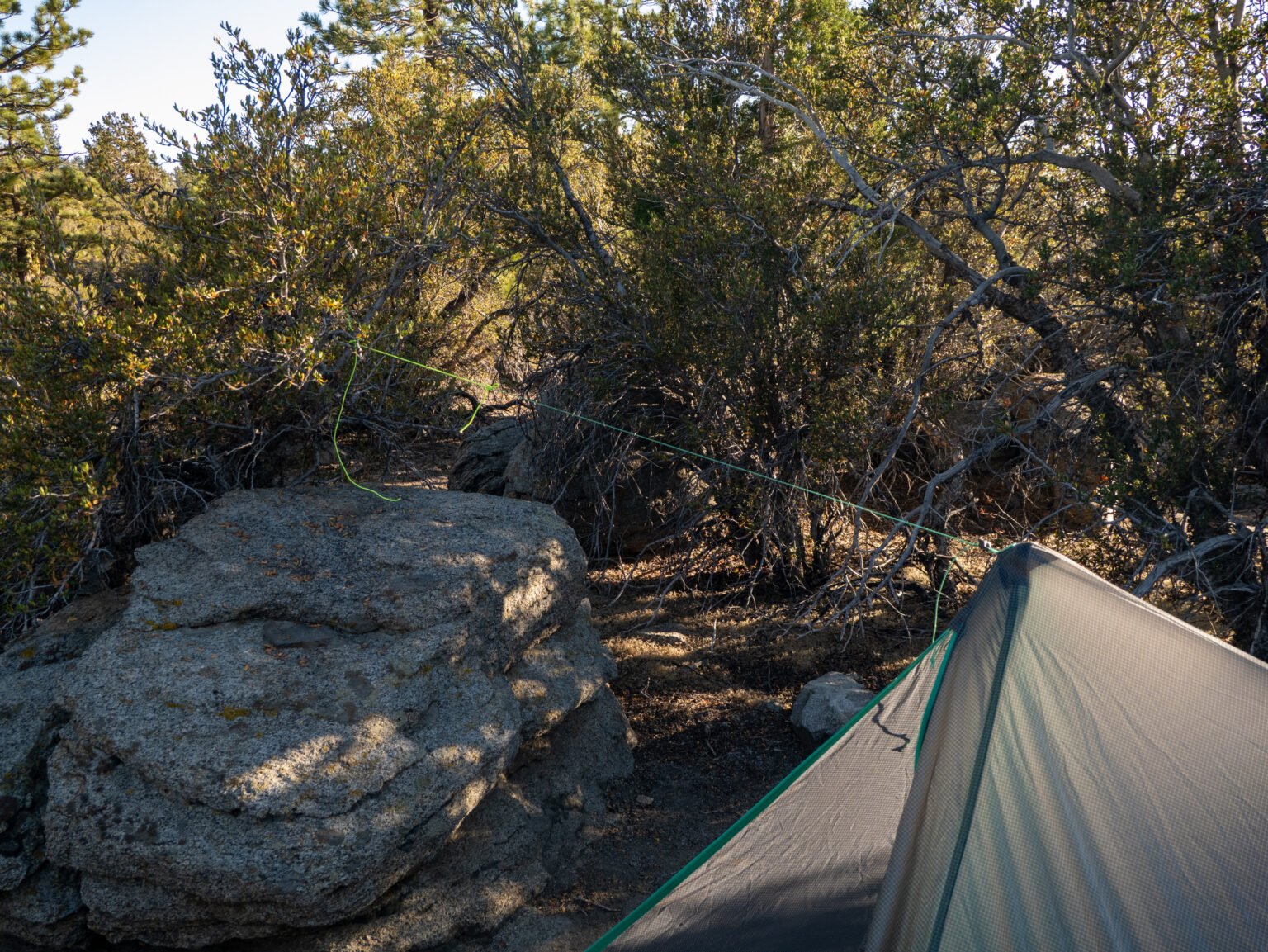
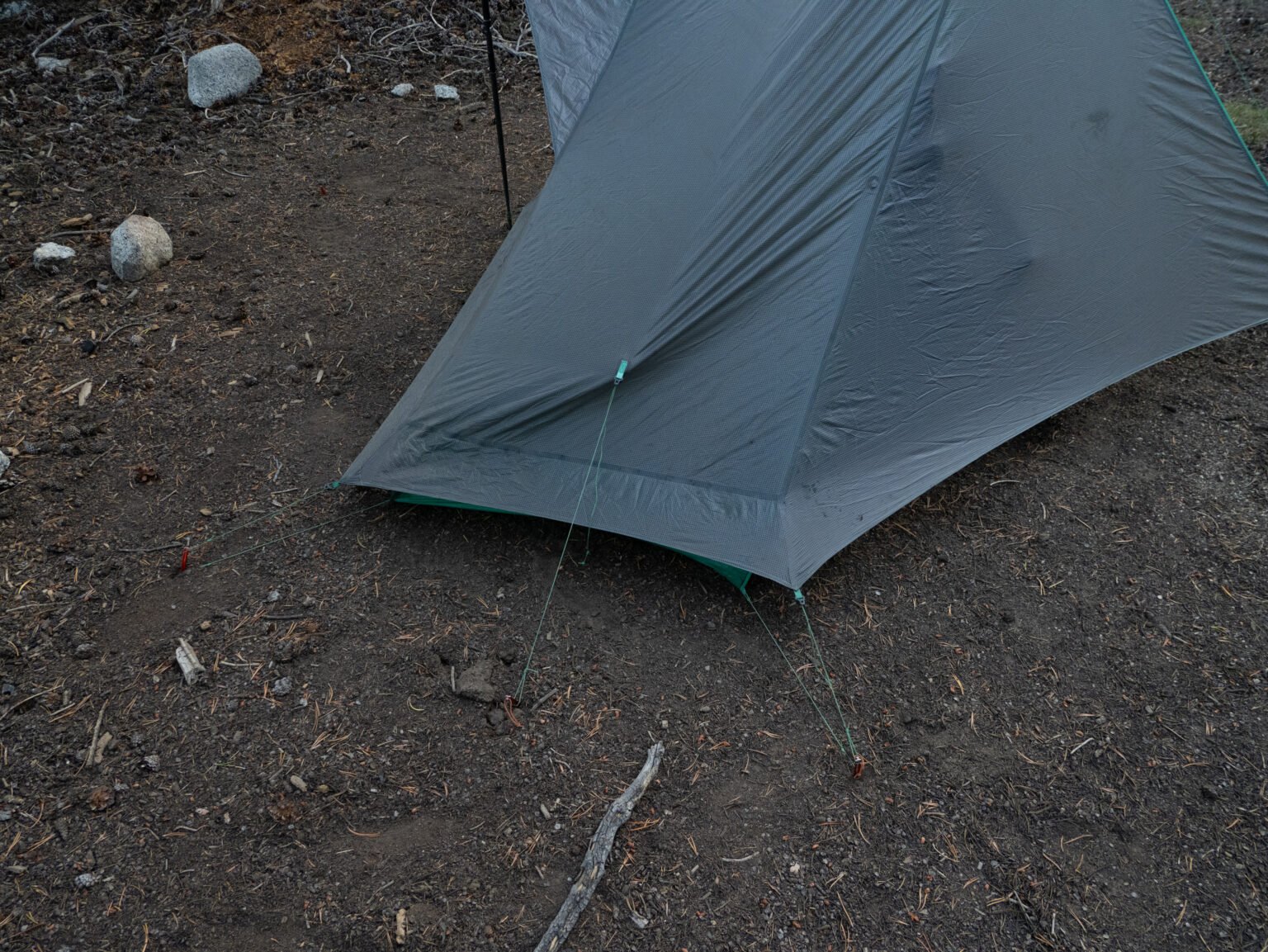
Without decent stakes, this is what it quickly looks like.
Stakes are perhaps the most important thing with trekking pole tents. There’s no pole arch giving the tent its shape. In this case the stakes don’t just stop the tent from blowing away – they also make sure the fabric isn’t lying on your face. Yet practically every tent manufacturer skimps heavily here. Decent stakes are often heavier and, to be honest, not necessary in nice weather on a green meadow. But when things get nasty, you’re grateful to have one or two Groundhogs or some extra cord with you so everything doesn’t blow up in your face. The only reason I don’t really hold this against the tent is that none of the competitors does any better.
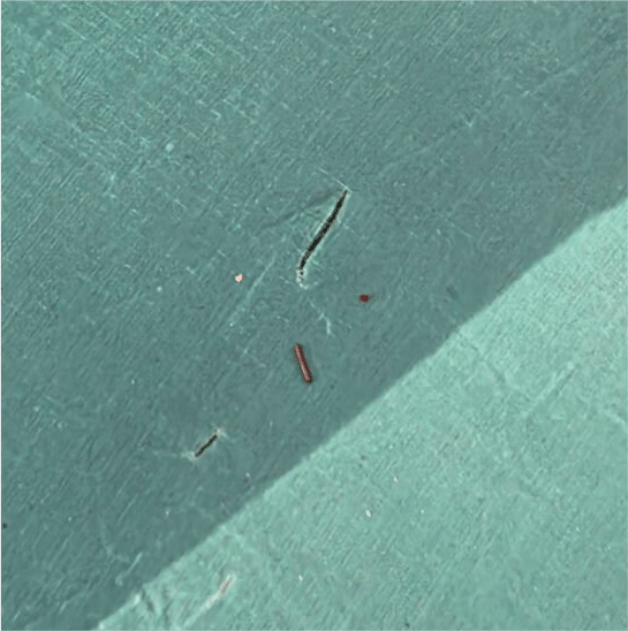
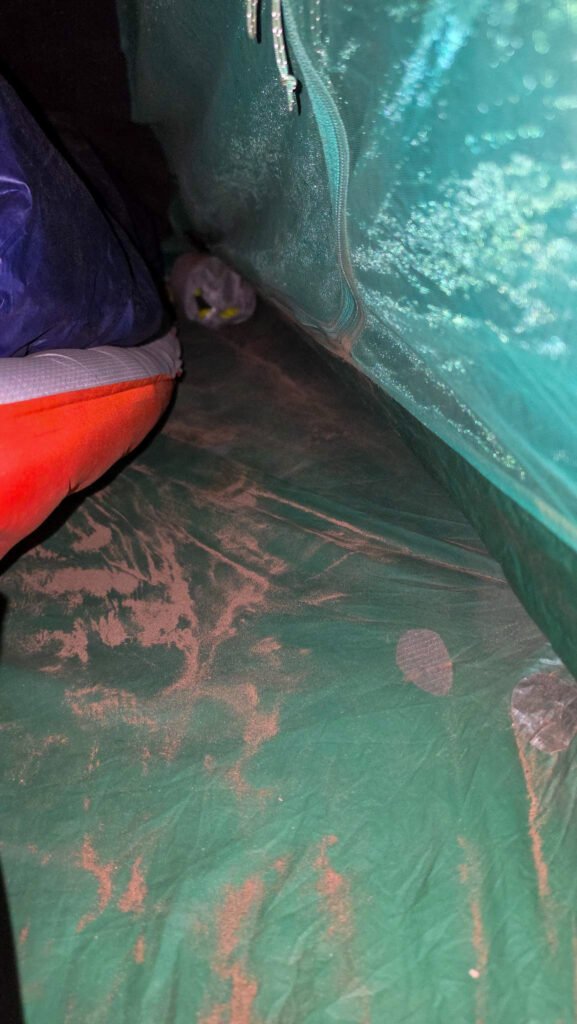
I don’t understand why you’d use a tougher fabric for the rain fly than for the floor. Big Agnes also points out that you should buy the footprint – US$100 in the USA – to extend the life of your tent. But maybe they could simply have used a tougher fabric in the first place. I do pay attention to where I pitch the tent and clear away anything sharp or questionable beforehand. Even so, I needed a patch or two.
Verdict on the Big Agnes String Ridge VST 1.5
Now I can say it: after the hike I parted ways with the Big Agnes String Ridge. It’s not a bad tent, but it’s very, very expensive for what it offers. The RRP is €550.
Just for comparison, here are a few examples:
- The Durston X-Mid 1 is double-walled, about 200 g heavier and currently costs around €350 including customs and shipping from Canada.
- A Gossamer Gear The One currently costs about €400 from a German online shop.
If you want to go lighter, a Durston X-Mid 1 Pro saves almost another 100 g for around €200 more. And if you don’t have to import to Germany – because you live in the USA, for example – you can get a Zpacks tent for the same money. Prices as of September 2026.
The tent does remain interesting for anyone who finds a two-person tent takes up too much space but would like a bit more room inside – and not just at the head and foot end, but along the sides as well. People who hike with a small to medium-sized dog could also be happy with it.
For everyone else, I’d only recommend the tent if you find a good deal. I think the RRP of €550 is far too high, especially given the strong competition. In my opinion a fair price would be somewhere between €300 and €400. Above that, you really have to weigh up carefully whether it’s worth the premium over the competition.
My rating: ★★★☆☆ – 3 out of 5 stars