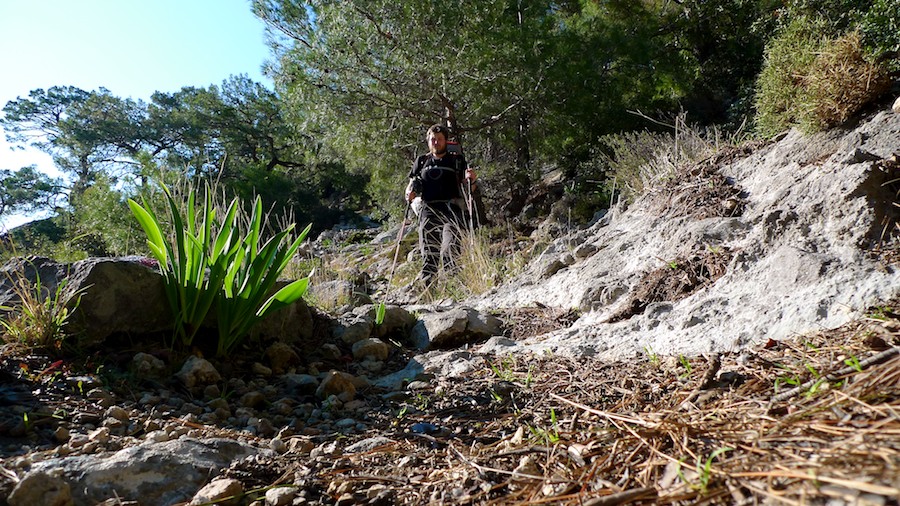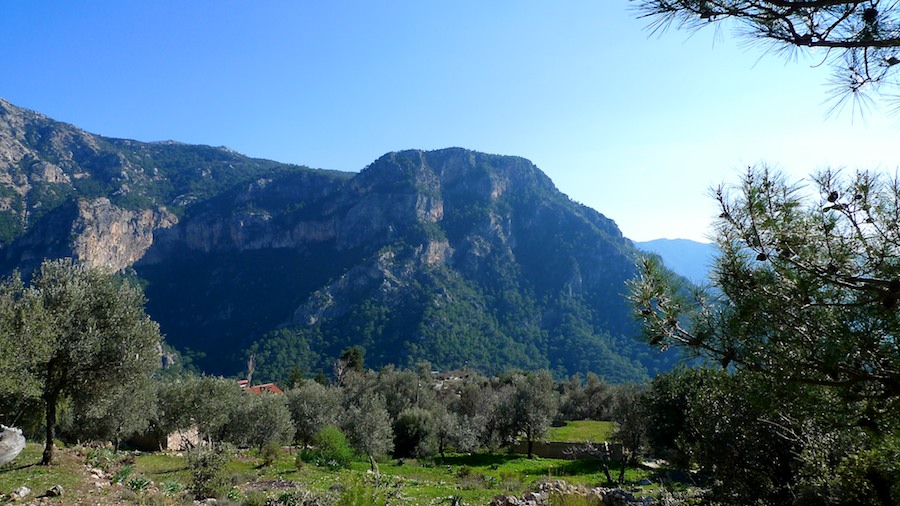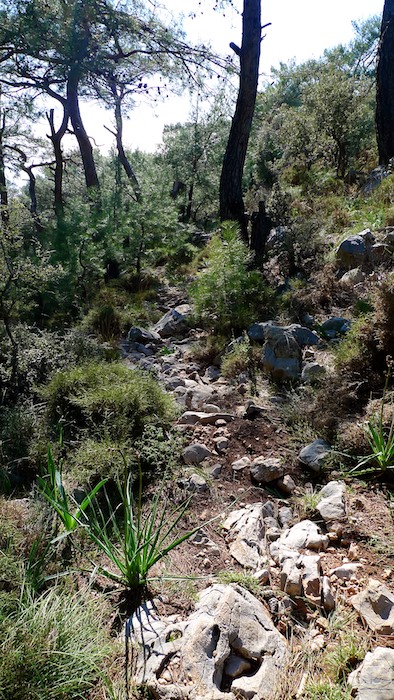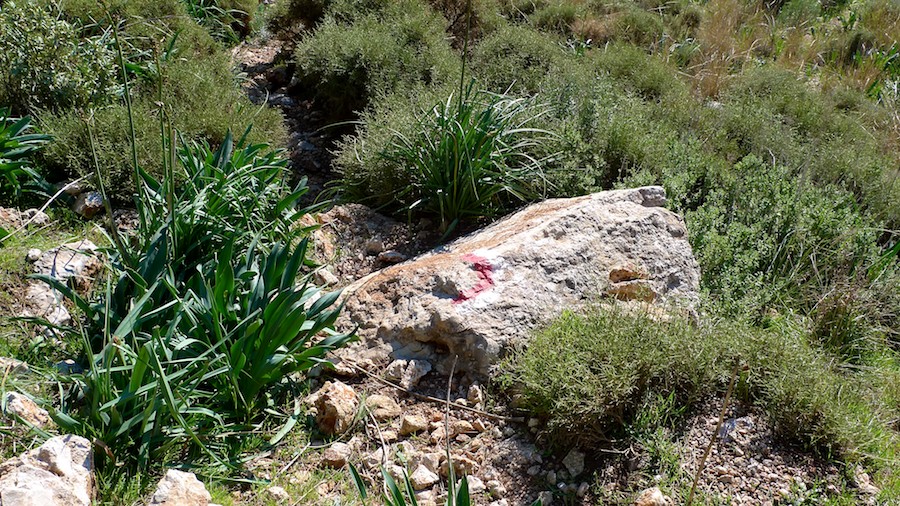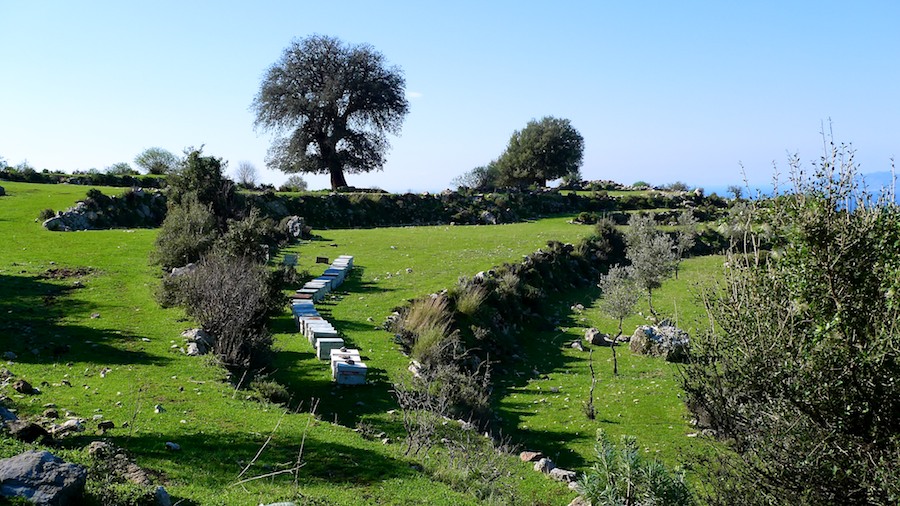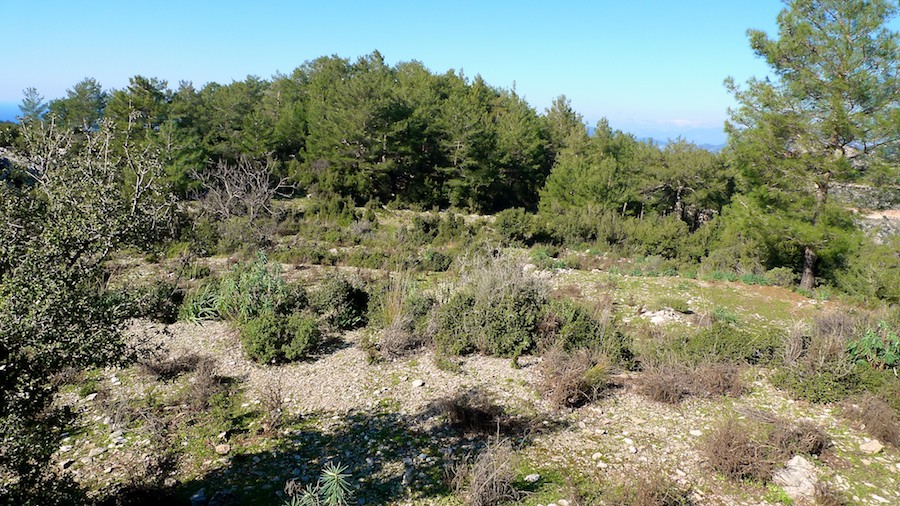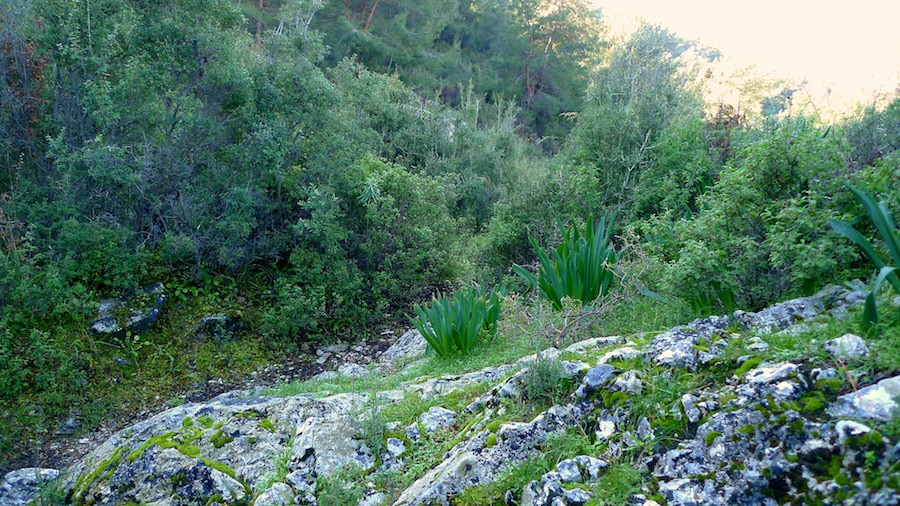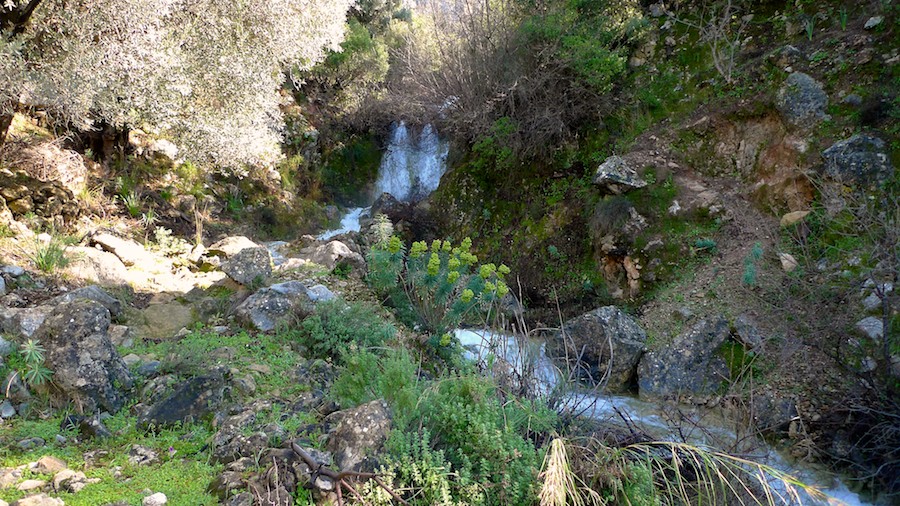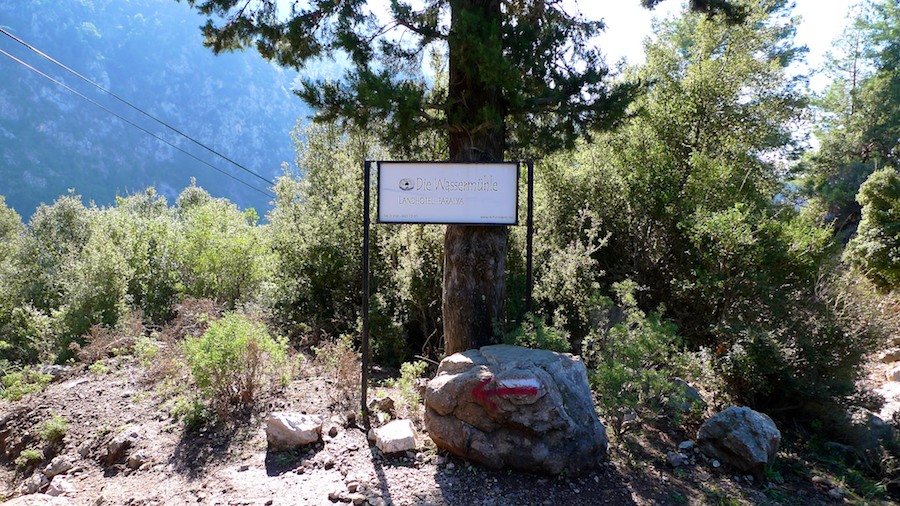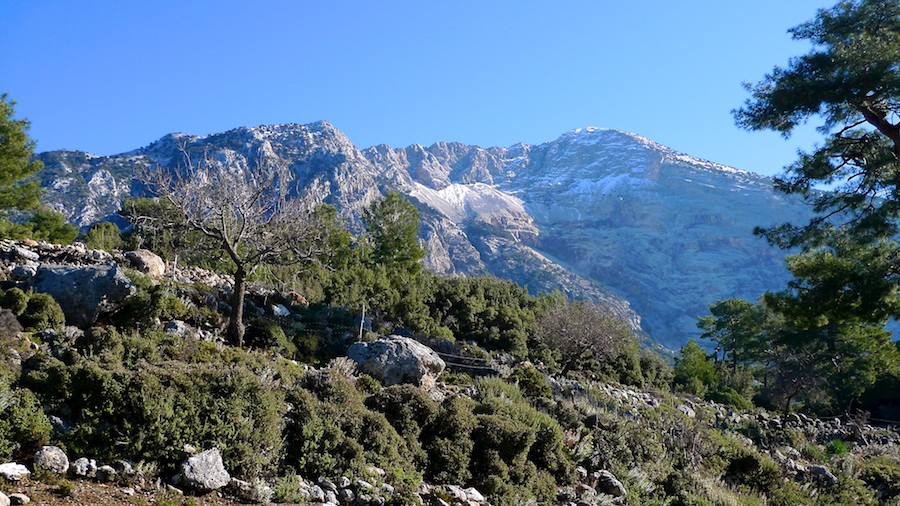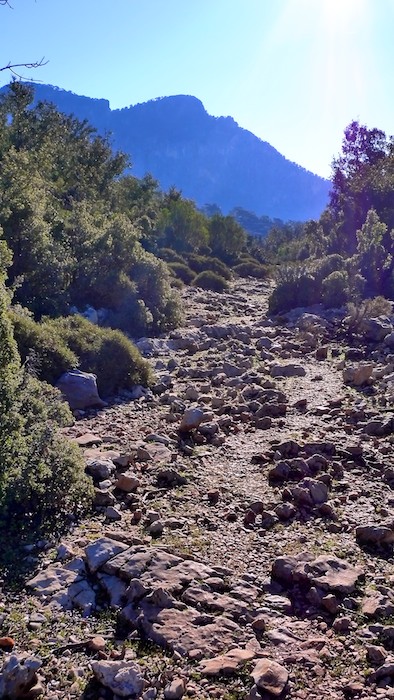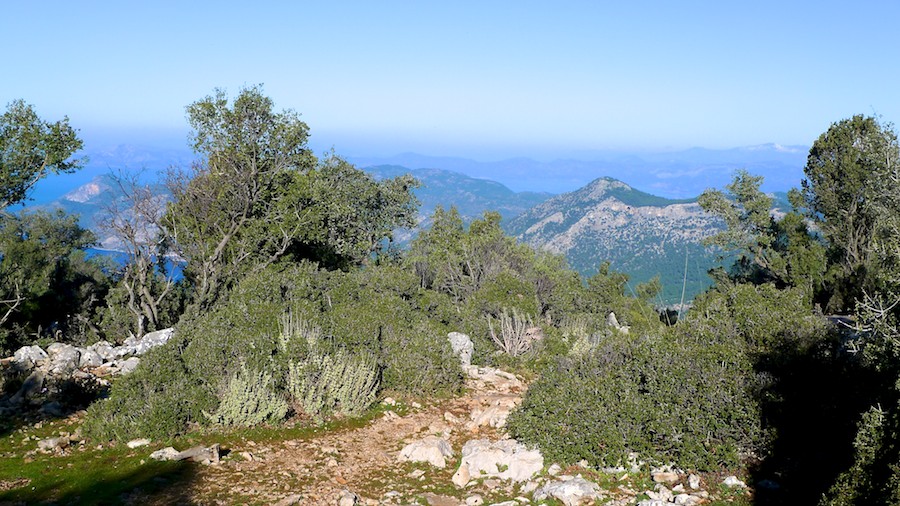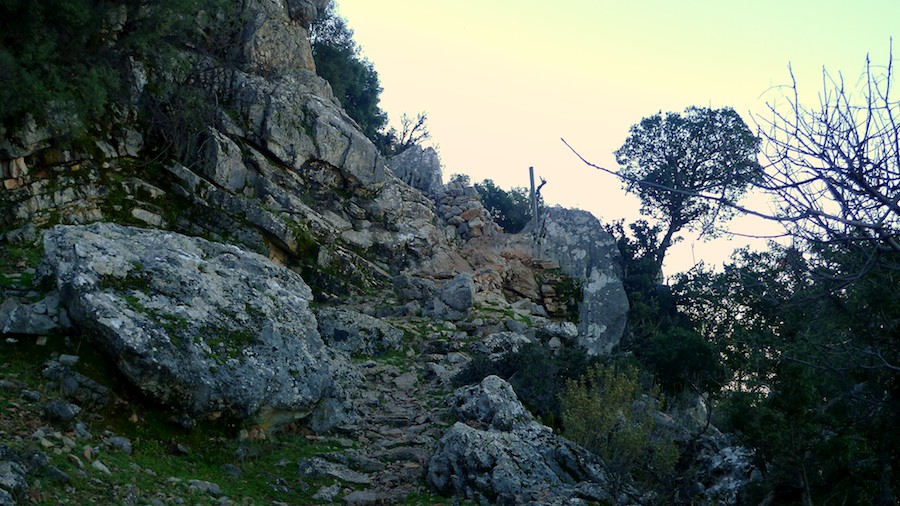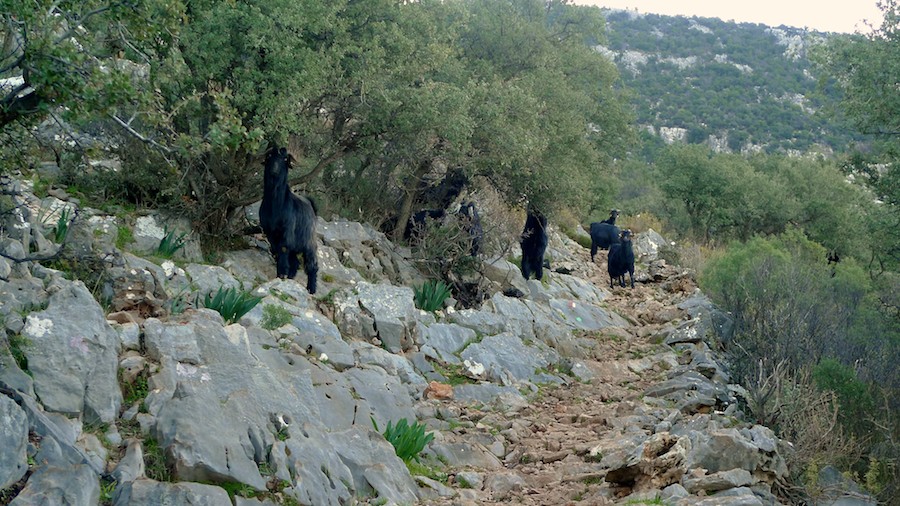
As early as 7 o’clock this morning, the uneven, stony ground drove me out of my tent. That was still a long way from an early start on the trail, though. First I treated myself to a hearty breakfast, which took not even half as long as packing everything up and loading my backpack. It was only at half past eight that I continued the climb on the Lycian Way towards Faralya.
GPS data for the stage
Passing a herd of goats, I topped up my water at a well. After laboriously pumping it through the ceramic filter, I carried on uphill with a few extra grams on my back. It took a while to reach the top and finally start descending again towards the first village along the way.
Right before the small village of Kozağaç there is a lovely cistern with clear running water, where I could fill up my bottle – this time without filtering. Only a gravel road runs through the small village, and the trail follows it all the way to Kirme.
There isn’t much to say about Kirme itself. You will find a water point there and, if you like, probably a place to stay for the night – at least according to the sign at the village entrance. What I found much more interesting, though, was the huge pile of shoes by the side of the path. Almost every one of them was in better condition than my slippers at home, and here they were simply lying around by the wayside.
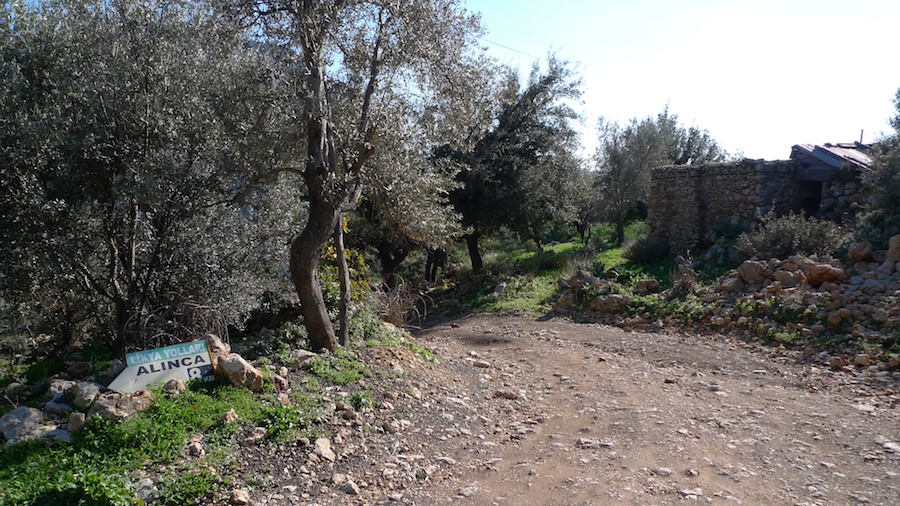
The narrow, stony path leads downhill through Kirme to a fenced-in property and another water source. On the way towards Faralya there are even advertisements right by the path to point tired hikers to a guesthouse – a common practice, as I was to find out.
Once in Faralya, you can decide whether to make the detour to Butterfly Valley. This side trip is said to be worth seeing but also very strenuous. I decided to skip it, as the distance to Kabak was enough for me for the day. The path leads through the village for a while and then turns left onto a narrow track. If you want to end your day earlier, you will find good places to pitch your tent after the climb.
Apart from one descent, the way to Kabak is not really demanding any more. You just have to make sure you don’t miss that descent – I first walked a few metres past the turn-off from the gravel road. Once you arrive in Kabak, you can choose between 2 routes.
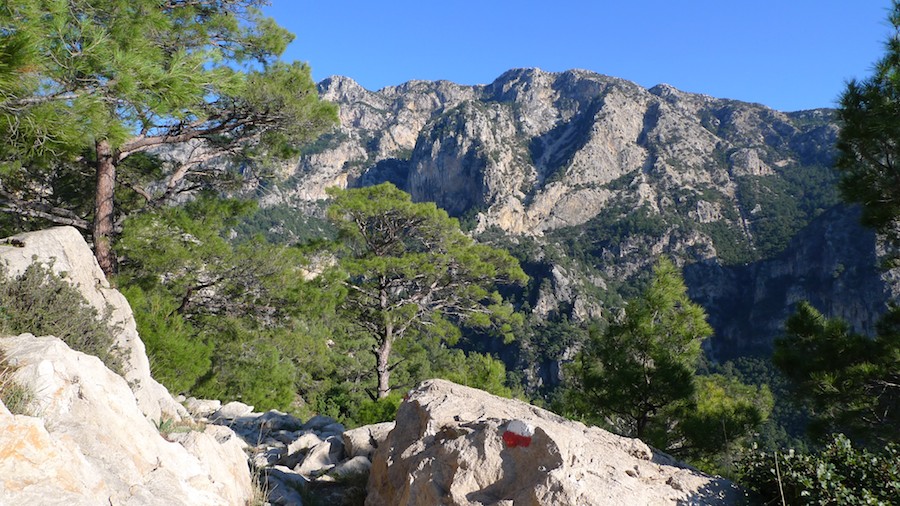
The main route led down to the beach, where you may also be able to pitch a tent. Instead, I opted for the alternative route, which passes above the village. This should also mean considerably less elevation gain on the climb to Alınca the next day. The alternative route was waymarked like the rest of the trail, and a stone inscribed “around the valley” pointed it out.
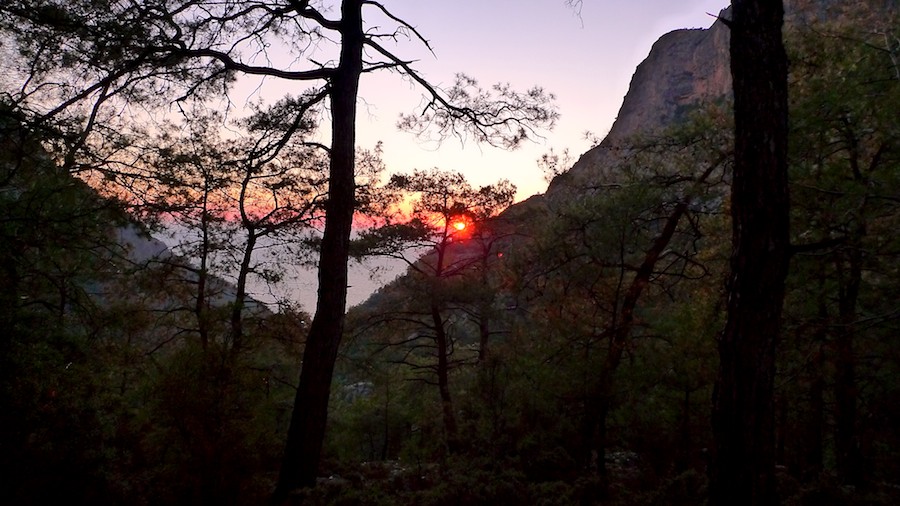
After a climb, the path leads to a small stream that you have to cross. For a moment I considered pitching my tent there, but then decided to climb a little further on the other bank. My reward was one of the better campsites of my entire trip in Turkey.
Tonight I could bed down on soft forest ground and use the existing fire pit for a little campfire. However, I soon gave up my experiments with the fire, because the wind and the position of my tent meant that my Hyperlite Mountain Gear trekking shelter was getting rather “smoky”. My sleeping bag had by now also taken on the scent of the campfire.
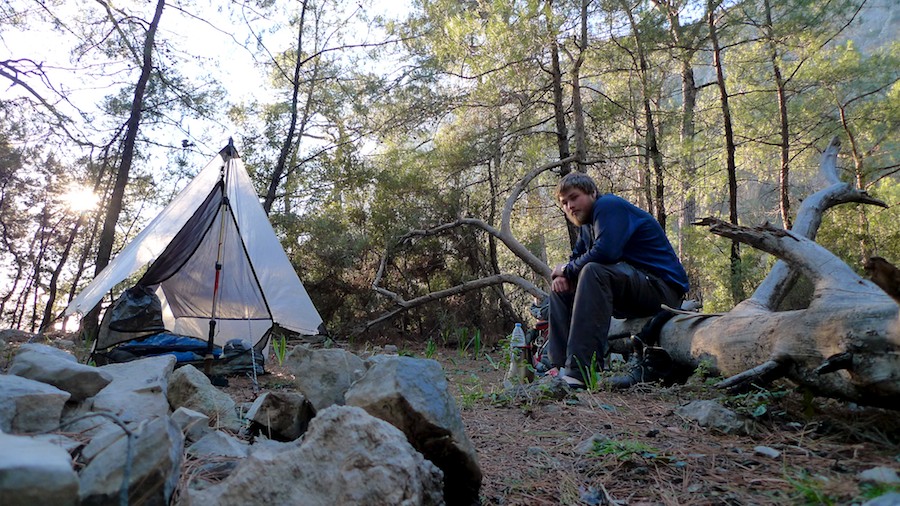
A few minutes from the campsite there is also a cistern with rather murky water that could clog the ceramic filter within seconds. But I was lucky – a small trickle of water ran right across the path, which I could use for filtering. In all likelihood this trickle isn’t always there, though, and then you have to walk a few metres back to the small stream you crossed earlier.
Dinner didn’t go quite perfectly either, as my eyes were simply bigger than my pot. The amount of pasta I had planned clearly exceeded the pot’s capacity, which led to a bit of a mess. At the end of the evening my cone, my pot and I were completely covered in tomato sauce – but also full and happy.